Foot Pain After a Marathon: What It Means and How to Recover Properly
Finishing a marathon is a huge achievement.
But for many runners, the celebration fades quickly when foot pain appears after the race.
Sore heels, tight arches, swollen feet, or sharp discomfort aren’t signs of weakness —
They’re signals that your feet have been under extreme stress for hours.
Understanding what your foot pain means is the first step toward recovering safely and running again without setbacks.
Why Foot Pain Is Common After a Marathon
During a marathon, each foot absorbs tens of thousands of impacts.
As distance increases, fatigue alters running form, placing extra load on the feet.
Common causes of post-marathon foot pain include:
-
Repetitive impact stress
-
Foot swelling inside tight shoes
-
Overworked plantar fascia
-
Tight calf muscles pulling on the heel
-
Heat and friction buildup
Ignoring these signals can turn temporary soreness into long-term injury.
Common Types of Foot Pain After a Marathon
Heel Pain (Plantar Fascia Stress)
Sharp or aching pain near the heel is often linked to stress on the plantar fascia — a thick band supporting the arch.
Arch Tightness or Burning Sensation
Caused by prolonged tension and limited foot movement during long runs.
Forefoot Soreness or Numbness
Often related to shoe compression as feet swell late in the race.
Swelling and Stiffness
Normal after endurance events, but should gradually improve within days.
If pain worsens or doesn’t improve, professional evaluation is recommended.
What to Do Immediately After the Finish Line
1. Don’t Stop Abruptly
Walk slowly for 5–10 minutes to allow circulation to normalize.
2. Remove Tight Running Shoes Early
Reducing compression helps swelling decrease naturally.
3. Elevate Your Feet
When resting, elevate your feet slightly to reduce inflammation.
4. Gentle Mobility, Not Aggressive Stretching
Light foot and ankle movement helps recovery without adding stress.
Recovery Over the Next 48–72 Hours
Foot recovery doesn’t end on race day.
Focus on:
-
Light walking or active recovery
-
Adequate hydration
-
Balanced nutrition
-
Quality sleep
Avoid intense training until foot pain clearly decreases.
When Is Foot Pain a Warning Sign?
Seek professional advice if you experience:
-
Sharp pain that worsens with walking
-
Pain lasting longer than 5–7 days
-
Swelling with redness or heat
-
Numbness that doesn’t resolve
Early intervention prevents long-term damage.
Why Recovery Footwear Matters After a Marathon
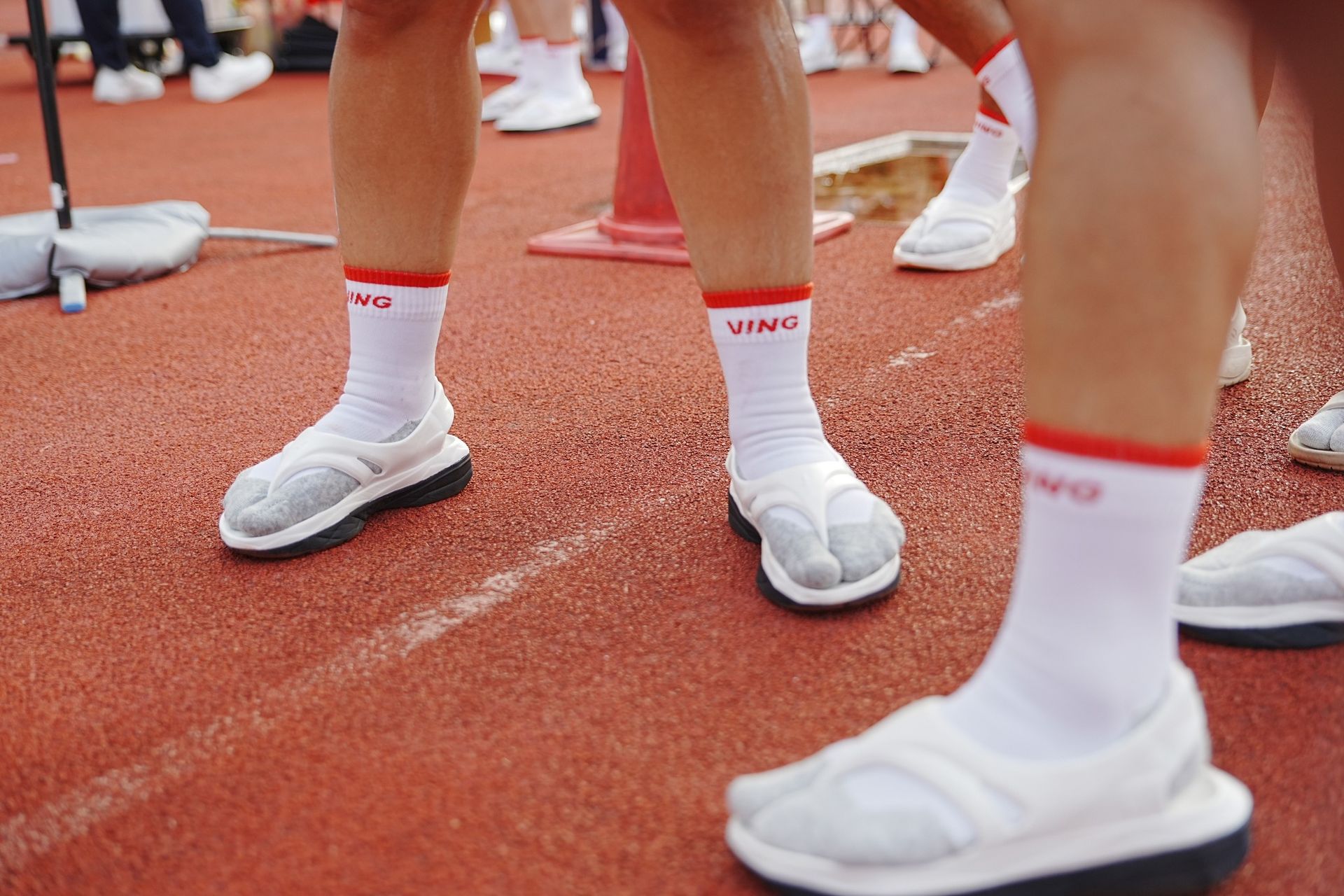
Many runners overlook what they wear after the race.
Post-marathon footwear should:
-
Reduce pressure on swollen feet
-
Allow natural foot movement
-
Support arches without squeezing
-
Help transition from race mode to recovery mode
Recovery-focused footwear can significantly affect how fast your feet return to normal.
Marathon Running Is a Long-Term Journey
One marathon shouldn’t end your running season.
By listening to foot pain signals and prioritizing recovery, you protect not just your next race — but your ability to keep running for years.
Respect the Distance. Respect Your Feet.
Marathons test limits, but smart runners recover with intention.
If your feet carried you across 42.195 kilometers,
they deserve proper care afterward.
Run long. Recover smart. Keep moving.